Strengthening Capability in Cluster Practice — A Global Conversation
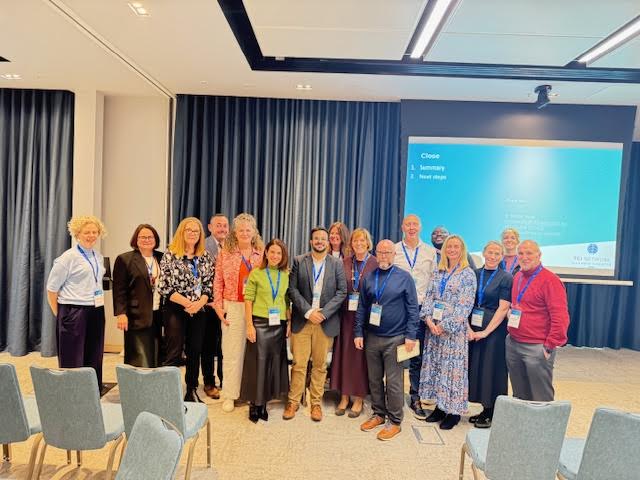
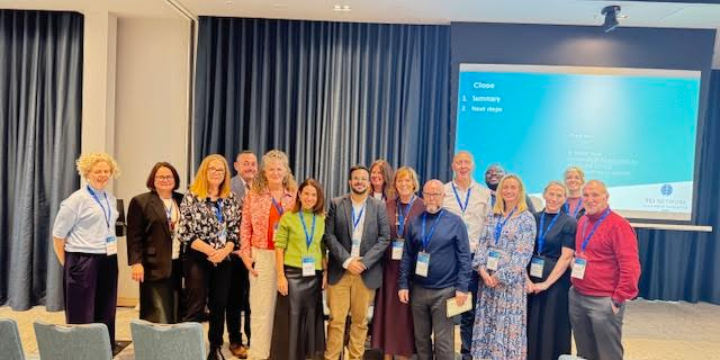
At the recent TCI Network Global Conference in Dublin, Dr Nicola Watts (TCI Oceania) and Yeinni Andrea Patiño Moya (Colombia / TCI Network Board) led an energising workshop exploring two questions that resonated deeply across the global cluster community:
1️⃣ Would the global cluster and ecosystem community benefit from recognised accreditation for individual practitioners — the people who convene, integrate and lead across innovation ecosystems?
2️⃣ What should its purpose and scope be — and which capabilities should sit with one person, be distributed across the ecosystem, or be supported through digital tools?
Cluster managers, facilitators and ecosystem integrators are increasingly asked to navigate complexity, align diverse stakeholders, build trust, unlock investment and drive innovation — yet many still lack role clarity, professional recognition and structured development pathways.
What Participants Identified as the Opportunity
✔ Recognise the complexity and value of cluster work
• Elevating the integrator role that orchestrates activity across government, industry, community, investors and knowledge institutions for collective impact.
• Shifting perceptions from “administrative/project support” to strategic ecosystem leadership.
• Establishing a common language about what cluster and ecosystem practice involves.
✔ Build credibility with funders and investors
• Demonstrating that accredited practitioners are equipped to design for impact and uphold appropriate governance, risk management and financial stewardship.
✔ Strengthen talent attraction, retention and succession
• Supporting professional identity, mobility, recognition, and pride in the role.
• Creating a sustainable pipeline of practitioners to avoid over-reliance on a few individuals.
✔ Benchmark globally while growing locally
• Aligning with international standards to enhance comparability, mobility and shared practice across jurisdictions.
Learning From Existing Global Practice
While there are many strong capability-building and accreditation systems around the world, there is no overarching global framework for the practitioners who lead cluster and ecosystem work.
Across Europe, a well-developed ecosystem of capability-building exists:
- The European Cluster Excellence Initiative (ECEI), via EUCLES, awards Bronze, Silver and Gold labels benchmarking organisational maturity.
- National adaptations in countries like Denmark, Germany and France apply similar standards locally.
- Practitioner development is supported by:
• the Master in Cluster Management and Territorial Networks (ITIRI, University of Strasbourg)
• the Cluster Booster Academy (European Cluster Collaboration Platform)
• ongoing training and professional recognition through France Clusters - In Catalonia, ACCIÓ has been providing significant support for capability development, career planning and leadership pathways for decades.
Adjacent Certifications for Individuals
There are also established professional development pathways that build relevant complementary skills, such as:
- Economic development credentials (i.e. CEcD in the U.S.; ACEcD in Australia)
- Facilitation and systems practice certifications (i.e. IAF Certified Professional Facilitator; Acumen Academy Systems Practice)
While these are valuable, they are not cluster-specific and do not fully reflect the breadth of ecosystem leadership required of cluster practitioners.
Together however, these examples demonstrate the value of treating cluster and ecosystem leadership as a profession supported by structured learning, standards and global practice — and point to clear gaps and opportunities for further development.
A Draft Competency Matrix — and a Path Forward
A draft competency matrix has since been developed to support ongoing conversation, revealing that the capabilities required of ecosystem leaders extend far beyond project management. The draft is included below for feedback and refinement.

Momentum behind this topic is clearly building. A key question now is whether the TCI Network, as the world’s leading cluster community, should help shape the next stage of this conversation — and, importantly for us in Oceania, whether there is appetite to co-develop a pilot partnership approach that meets regional needs.
Open Questions for the Next Phase
- Who are the right partners to co-design capability building, assessment and accreditation?
- What performance indicators or evidence requirements should be used?
- Should/can one person hold all capabilities, or should competence be distributed across a team or ecosystem? Which capabilities can be enhanced/supported by digital technologies?
- How long should certification last? What continuous professional development (CDP) should be expected?
- What levels might exist? (e.g., Beginner → Practitioner → Advanced → Master / Ecosystem Leader)
- What learning model works best? (Online, blended, mentoring, practical assessment?)
- How should we balance global consistency with place-based flexibility?
- Should Oceania design and pilot a regional model first, or align immediately with more global frameworks?
We Invite Your Voice
This is an important — and complex — opportunity for the global cluster community.
We warmly invite you to share your insights, express interest in collaborating, and help shape what comes next for capability development in cluster and ecosystem leadership.